
WCAG 2.1 AA,
Before the Deadline
The DOJ Title II rule requires state and local government websites to meet WCAG 2.1 Level AA. We audit, remediate, and rebuild accessible sites for public entities and the nonprofits that serve them.
Trusted By



Accessibility Work
We've Actually Done
A Department of Justice rule under Title II of the ADA requires state and local government websites and mobile apps to meet WCAG 2.1 Level AA. Entities serving 50,000 or more people must comply by April 26, 2027; smaller entities and special districts by April 26, 2028. Hooten Design audits and remediates public-sector websites to meet the standard, starting with a free accessibility assessment.
Plenty of agencies will run an automated scan and hand you a PDF of errors. That is not remediation, and it is not what the DOJ rule is asking for. Meeting WCAG 2.1 AA means fixing the underlying design system, templates, content patterns, and documents that real people with disabilities use every day.
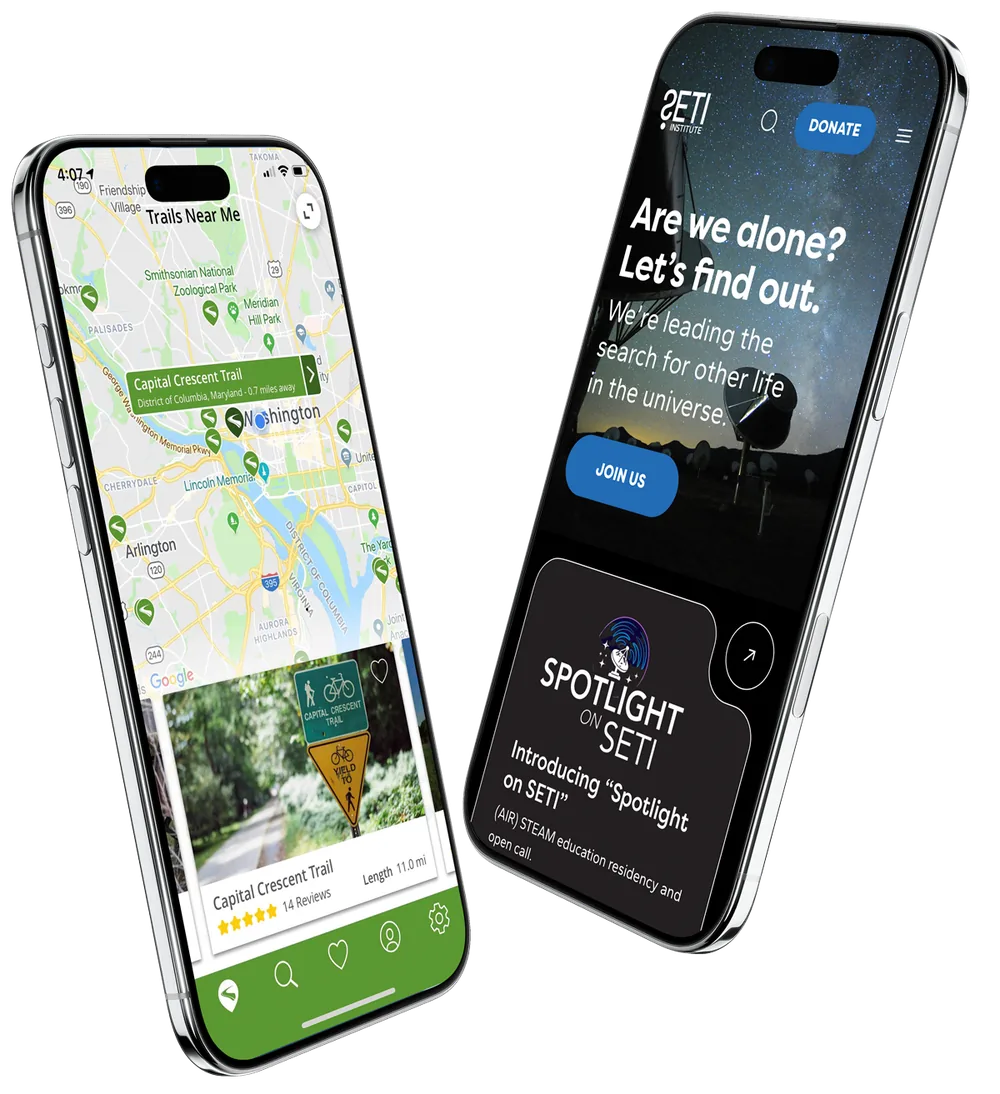
We have done this work in the open. For the Mary Tyler Moore Vision Initiative, we designed and built a resource platform for an audience that includes people with low vision and vision loss, where accessibility was the core design constraint rather than a checklist item. The same thinking runs through our work for the SETI Institute, the Michael J. Fox Foundation, and Rails-to-Trails Conservancy.
Our engagements cover the full arc: auditing what you have, prioritizing what matters most, remediating templates and components, training your content team, and setting up monitoring so the site stays conformant after launch. We design and build to WCAG 2.1 AA as standard on every project.
Start with a free assessment. We will review your site, flag the highest-risk issues, and tell you plainly what it will take to get compliant before your deadline.
Accessibility in
Practice

Mary Tyler Moore Website
A resource platform designed for an audience living with vision loss, built to WCAG 2.1 AA from the first wireframe.
View Case Study
SETI Website
Modernized a content-heavy site with accessible templates, clear hierarchy, and readable long-form research.
View Case Study
TrailLink iOS App and Website
TrailLink serves millions of trail users with maps, guides, and tools built for every visitor.
View Case StudyAudit, Remediate,
Maintain
Accessibility Audits
A full WCAG 2.1 AA audit combining automated scanning with manual keyboard, screen reader, and zoom testing across your key templates and user flows.
Template & Component Remediation
We fix the design system itself: contrast, focus states, headings, landmarks, forms, and navigation, so fixes hold across every page.
Accessible Development
Semantic HTML, ARIA where it belongs, keyboard operability, and screen reader support built into the front end, not patched on after.
Accessible Design Systems
Color, type, and component standards that meet AA contrast and usability requirements while still looking like your brand.
Content & PDF Strategy
A practical plan for documents and content: what to remediate, what to convert to HTML, and what to archive under the rule's exceptions.
Monitoring & Training
Ongoing scans, regression checks, and training for the staff who publish content, so compliance survives the next redesign and the next hire.
How We Work
Discovery
We learn your business, audience, and goals through stakeholder interviews and competitive analysis.
Strategy
Define positioning, sitemap, content strategy, and conversion goals before any design begins.
Design
High-fidelity mockups and interactive prototypes that bring your brand to life on screen.
Develop
Clean, performant code built on modern frameworks with CMS integration and SEO best practices.
Launch
Thorough QA, performance optimization, analytics setup, and ongoing support post-launch.
What Sets Us Apart
Research Before Design
Audience, market, and business goals guide the work before visual concepts begin.
Senior Design and Engineering
Experienced designers and engineers work together from early decisions through launch.
Recognizable Client Work
Our clients include SETI Institute, BlueStar, adidas, Fjällräven, and the Michael J. Fox Foundation.
One Accountable Partner
Strategy, brand, design, and engineering stay with the same team.
Built for Remote Collaboration
We work across US time zones and internationally, using clear reviews and direct access to the team.
How It Works
A Realistic Pathto Compliance
Most agencies can get from first audit to conformance in one focused engagement. Here is the sequence we follow.
- 01
Free assessment
A review of your homepage, key templates, and highest-traffic flows. You get a plain-language summary of where you stand and the risks that matter most.
DELIVERABLE: ASSESSMENT SUMMARY
- 02
Full audit
Automated scanning plus manual testing with a keyboard, screen reader, and zoom across representative pages, forms, and documents.
DELIVERABLE: PRIORITIZED ISSUE REPORT
- 03
Prioritized roadmap
Issues ranked by user impact and legal risk, mapped to your templates and content types so fixes scale instead of multiplying.
DELIVERABLE: REMEDIATION ROADMAP
- 04
Remediation
Design and development fixes to the design system, templates, and components, with content guidance for your team along the way.
DELIVERABLE: CONFORMANT TEMPLATES
- 05
Verify and monitor
Retesting against WCAG 2.1 AA, documentation of conformance, and a monitoring plan so new content does not quietly undo the work.
DELIVERABLE: CONFORMANCE DOCUMENTATION
Entities Covered
by Title II
Cities & Counties
Municipal and county websites, service portals, permits, payments, and public records.
Special Districts
Fire, water, transit, library, parks, and other special district governments, on the 2028 deadline.
Public Education
Public schools, community colleges, and state universities, including course and enrollment content.
Public Safety & Courts
Police, emergency services, and court websites where access to information can be urgent.
State Agencies
Agency sites, benefits portals, and the third-party tools and vendors they rely on.
Nonprofit Partners
Organizations delivering services under contract with public entities, where accessibility expectations increasingly flow into vendor requirements.
What It
Costs
Every engagement starts free. Paid work is scoped to the size of your site and the issues we actually find.
Free Assessment
A no-obligation review of your site's accessibility posture.
- Review of homepage and key templates
- Highest-risk issues flagged
- Plain-language summary call
- Honest read on effort and timeline
Accessibility Audit
A full WCAG 2.1 AA audit with a prioritized remediation roadmap.
- Automated and manual testing
- Keyboard and screen reader review
- Issues ranked by impact and risk
- Roadmap mapped to your templates
Remediation & Rebuild
Design and development work to bring the site into conformance.
- Design system and template fixes
- Accessible component rebuilds
- Content and PDF strategy
- Conformance documentation and monitoring
We are designers and engineers, not attorneys. We build conformant websites and document the work; your counsel advises on legal obligations.
Common Questions
Start With a
Free Assessment
Tell us about your site and your timeline. We will review it, flag the highest-risk issues, and give you an honest read on what compliance will take.
We use cookies for analytics so we can understand how visitors use this site. You can opt out at any time below or via the footer. See our Privacy Policy.