
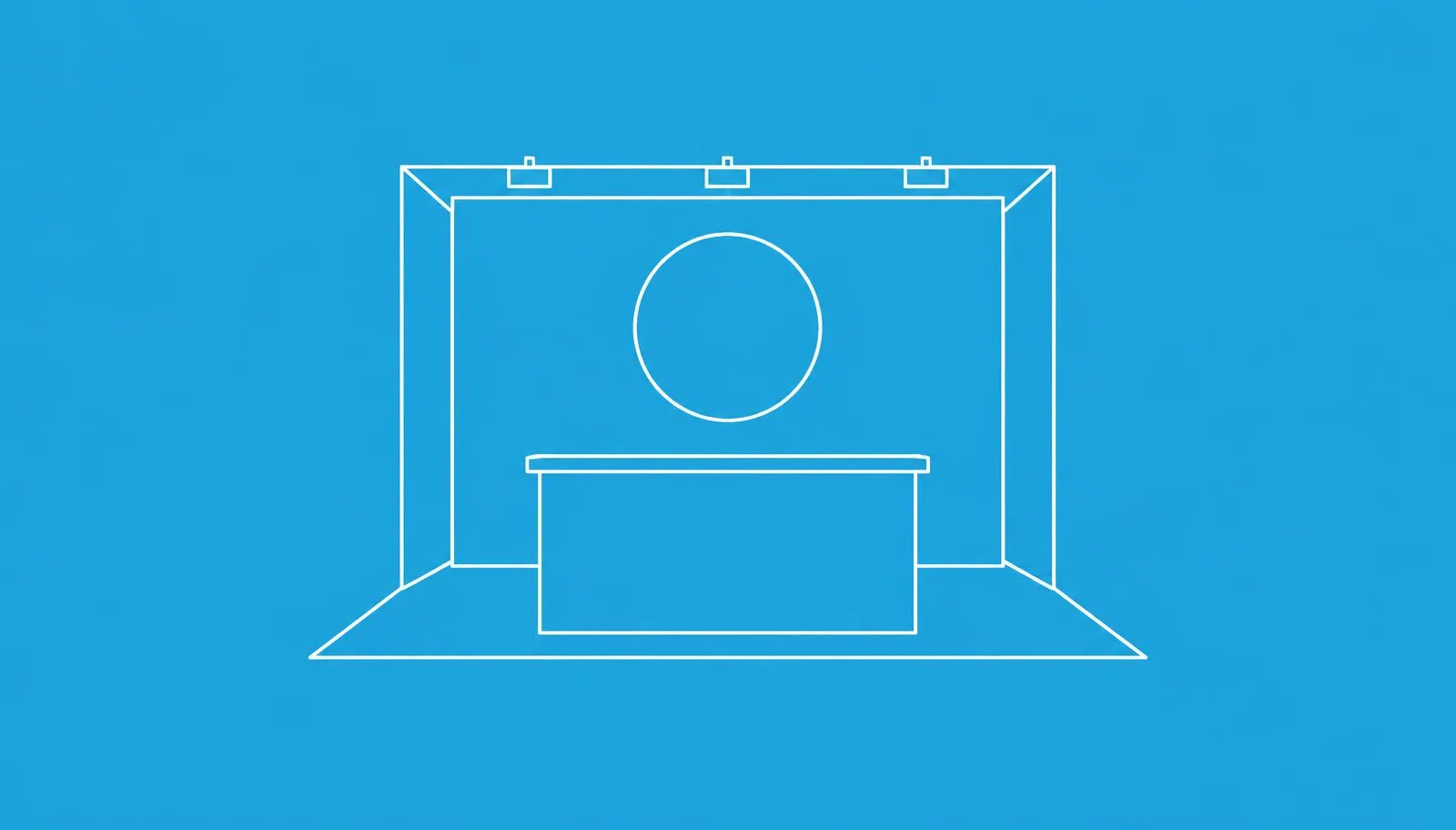
Walk any trade show floor and you will see the same pattern. Companies invest heavily in booth structures, lighting, and furniture, then cover the walls with a logo, a tagline, and a list of product features. Attendees walk past at a steady pace, glance for a second or two, and keep going.
The hardware is rarely the problem. The problem is that there is no idea on the walls. A strong creative concept is what turns a booth from a rented frame into a reason to stop.
People decide from the aisle
Most attendees decide whether to stop before they reach your booth. They are reading from across the aisle, often while talking, checking their phone, or looking for a specific exhibitor. Whatever is on your back wall needs to work at that distance and in that moment.
That means one message, not five. A short, confident headline in large type. A single strong image or graphic. Enough contrast that it reads under convention hall lighting. Product details, specifications, and secondary messages belong at eye level and closer in, where people who have already stopped can take them in.
What a creative concept actually is
A creative concept is the central idea that ties the booth together. It might be a bold statement about the problem you solve, a visual metaphor, or a simple question that makes your audience curious. It is not a layout. It is the thought the layout expresses.
A good concept does three things:
- It speaks to the attendee's problem, not just your product name.
- It is simple enough to understand in a few seconds from the aisle.
- It gives your team something to talk about, so conversations start naturally.
The same idea should carry into pre-show emails, social posts, handouts, and follow-up. When the booth is part of a campaign rather than a standalone graphic, attendees are more likely to recognize you and remember you afterward.
You may not need a new booth
Many companies assume a fresh look requires new hardware. Often it does not. Most modular and fabric tension systems can be reskinned with new graphics at a fraction of the cost of a new structure. If you already own a booth, or rent from a fabricator, a strong concept can transform the space without changing the frame.
This is where the creative team and the fabricator work best together. The fabricator knows the structure, materials, and production specs. The creative team brings the idea, the hierarchy, and the artwork. When both are involved early, the graphics are designed for the actual panels, seams, and sight lines of the booth.
Design principles that hold up on the floor
- Put the headline high. The top of the back wall is visible over crowds and counters.
- Use fewer words than feels comfortable. If a message takes more than a few seconds to read, move it lower or cut it.
- Choose one dominant visual. A single large image is stronger than a collage of product shots.
- Mind the seams and counters. Keep faces, headlines, and logos clear of panel breaks and anything that will stand in front of them.
- Design for the lighting. Test color and contrast with printed proofs, not just on screen.
- Plan the path. Think about where people enter, where demos happen, and where your team will stand.
Measure what happens after the show
Decide before the show what success looks like: booth conversations, badge scans, demo bookings, or meetings scheduled. Give attendees a clear next step, such as a QR code to a dedicated landing page, so you can connect booth traffic to real follow-up. A booth that draws people in is only worth it if those conversations go somewhere.
Bring the idea first
We have designed trade show and large-format work for brands including IFS Industries, BlueStar, Big Chill, and Anark. We can work with your existing booth or alongside your fabrication company to develop a concept that resonates with show attendees. See our trade show booth design services, or our brand collateral work for the materials that support it.
Frequently asked questions
- Do I need a new booth to refresh my trade show presence?
- Often not. Most modular and fabric tension booths can be reskinned with new graphics, which costs far less than new hardware.
- What makes a trade show booth stand out?
- One clear idea that speaks to the attendee's problem, a short headline placed high on the back wall, a single strong visual, and enough contrast to read from the aisle.
- Can a design agency work with my booth fabricator?
- Yes. The fabricator handles structure and production specs, and the creative team develops the concept and artwork sized to the actual panels and sight lines.
More reading
How to Redesign a Website Without Losing SEO Rankings
A practical website redesign SEO checklist: benchmarking, URL mapping, 301 redirects, content preservation, staging checks, and what to watch after launch.
How to Write a Website Redesign RFP Agencies Want to Answer
What to include in a website redesign RFP: goals, scope, platform, budget range, timeline, and evaluation criteria, plus a simple outline you can use.